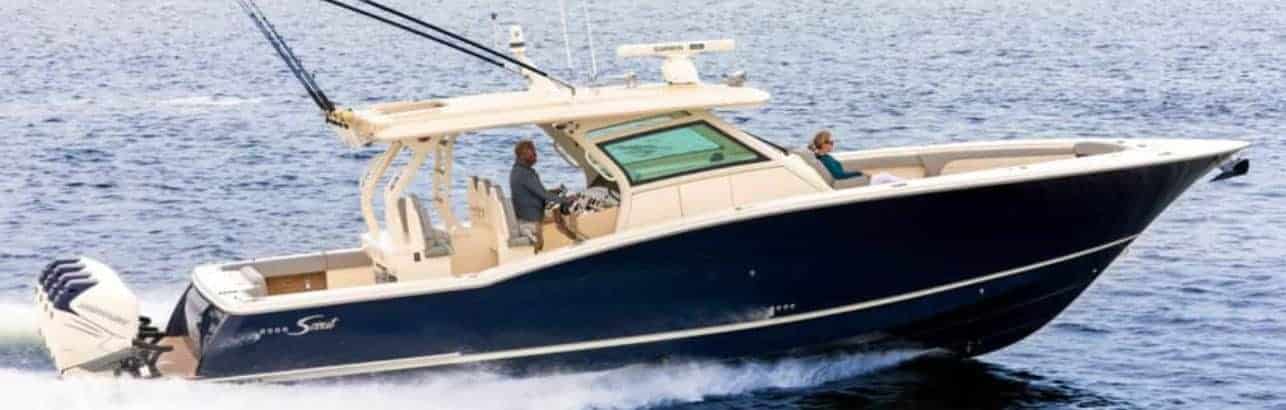
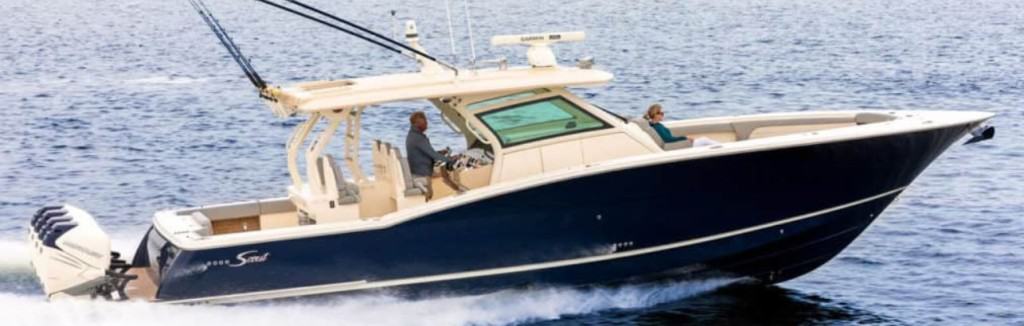
Understanding the Costs of Boat Ownership

If you’re thinking about buying a boat, there’s a lot to consider. In particular, you need to be completely informed on all the costs of boat ownership so you can have the most enjoyment on the water.

To customize your craft to fit your exact needs, use our Build Your Scout tool. You can add features for fishing, sporting, entertainment, and more to best enjoy your boating experience!

Initial Costs
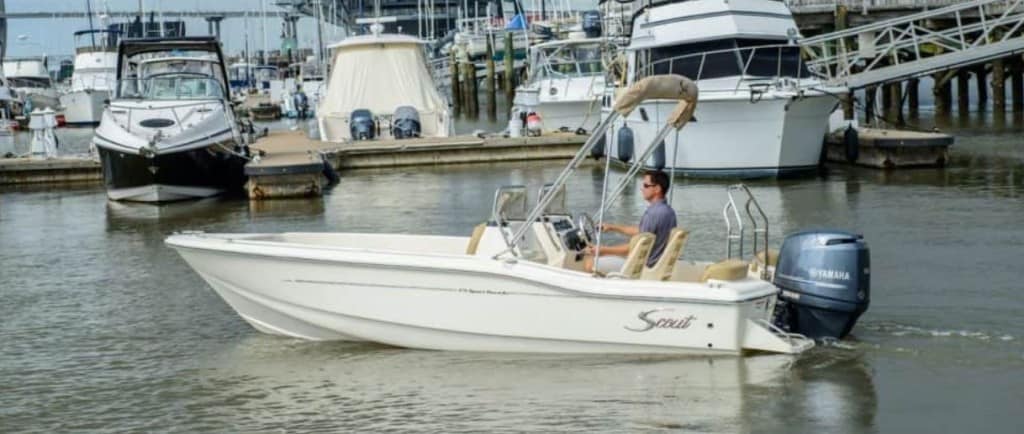
The first step to buying a boat is establishing your initial budget. You need to decide how much you want to spend on the boat and what you can afford. The budget you have in mind can help guide you to the right boat for your needs.

Generally speaking, the larger the boat, the more it will cost. This means if you have a large budget, you could probably afford a larger craft. However, keep in mind that bigger is not always better, especially for new boat owners.

Annual Maintenance

Just like your car or truck, a boat needs routine maintenance. The amount of maintenance, as well as the cost, will vary depending on the type of boat you own. New boats, in general, will cost less to maintain than an older boat. Boats will need engine maintenance, cleaning, hull maintenance, winterizing, and de-winterizing. These costs can range from a couple hundred to thousands of dollars annually.

Boat Insurance
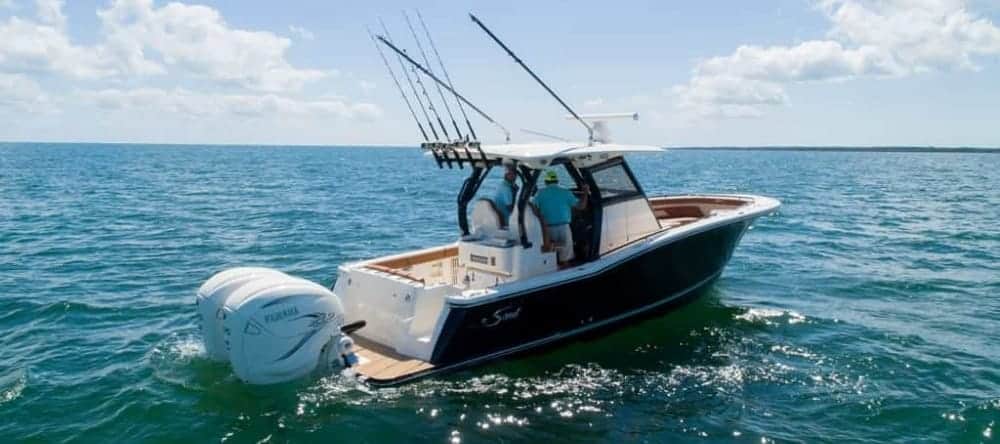
To own a boat, you should at least have liability coverage. However, you may also want damage coverage, especially if it is a new, expensive craft. If you are using a loan to purchase the boat, you will likely need comprehensive coverage. If totaling the boat would be severely detrimental to your finances, it’s imperative to be well-insured.

Storage

You will also have to store the boat either at a marina, in a storage complex, or at your house. The most affordable route would be to store it on your own property, but if that’s not an option, you’ll have to pay for storage. Outdoor storage costs anywhere between $200 and $1,000, while indoor storage can go as high as $5,000 per season.

Equipment, Accessories, and Toys
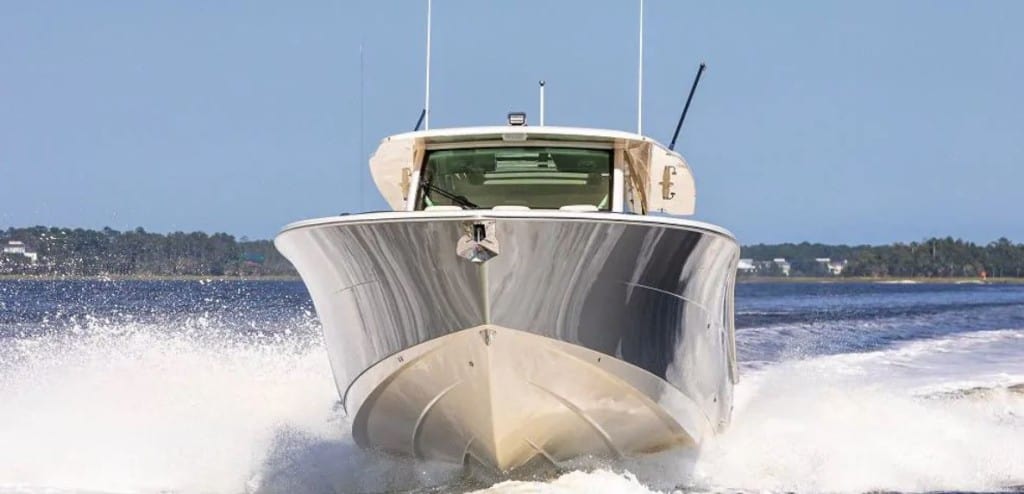
Boating can require a lot of equipment, including life jackets, safety equipment, fishing accessories, and more. Many of these will essentially be one-time costs—you likely won’t have to spend hundreds of dollars on life jackets annually—but some of them can be recurring. With towing equipment, skis, coolers, fishing rods, and more, you can easily spend $10,000 on accessories for a single boat, but most people can reasonably expect to spend about $1,000 equipping a vessel.

Purchase a Quality Boat from Scout
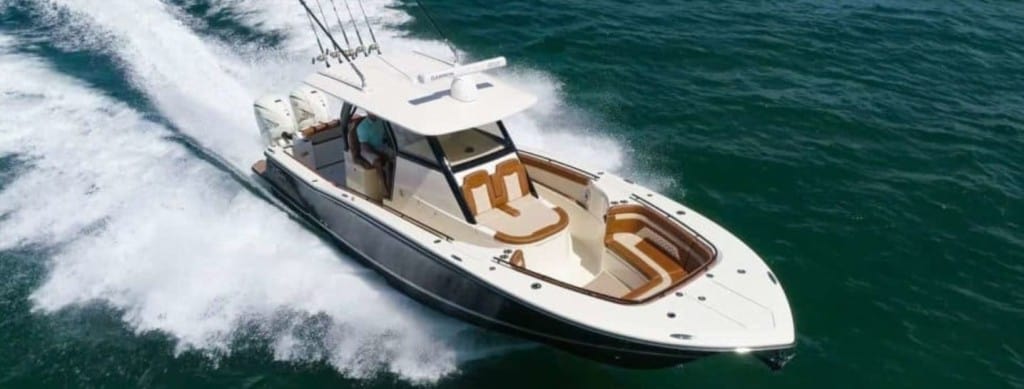
We hope you better understand the costs of boat ownership. If you’re ready to purchase a new craft, Scout Boats offers a large selection of top-quality crafts ranging from large offshore boats to nimble inshore skiffs. Plus, you can customize your boat to meet your exact needs with our Build Your Scout tool for maximum enjoyment on the water.
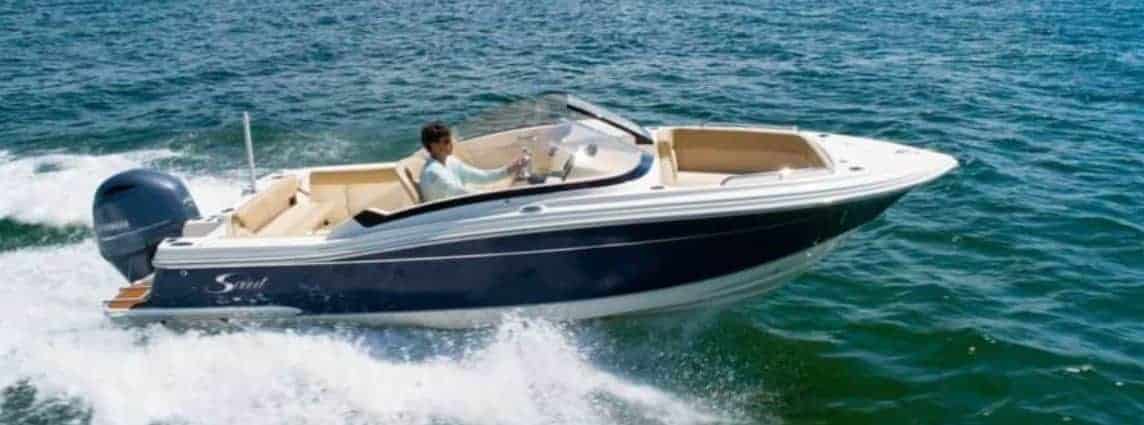
Scout Boats

Rough Water Boating Tips

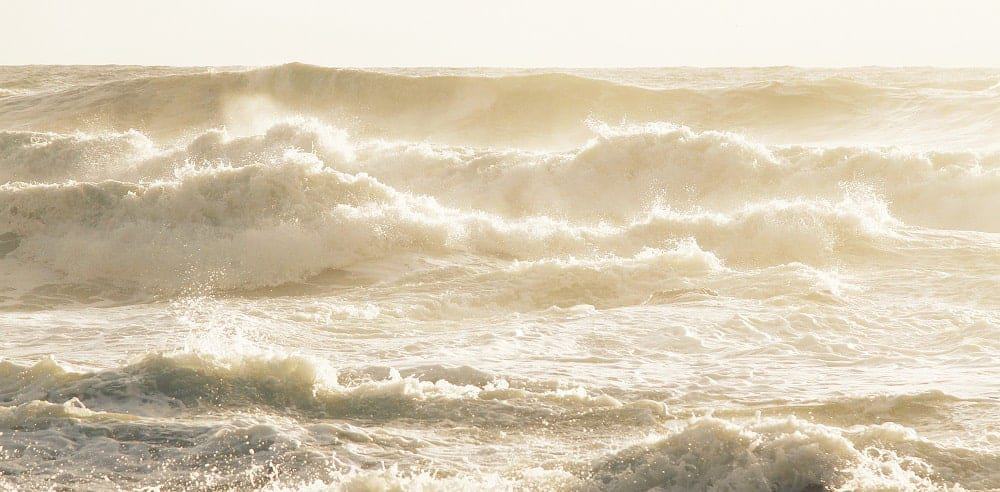
You can do your best to avoid harsh conditions while boating, but you’ll eventually run into choppy waves, high winds, and rough water. Rough water can range from mildly frustrating to downright dangerous, but with these rough water boating tips, you can maintain safety and comfort for yourself, your boat, and your passengers.

Customize a craft to fit your exact needs with our Build Your Scout tool!

Check the Weather Before You Leave

Before you leave, check the local weather report, keeping a watchful eye for wind speeds and wind direction. If you see that winds will be high or storms are expected in the near future, it may be best to delay your trip and avoid the hassle of rough water.

Have More Than Enough Fuel

Boating in rough water consumes more fuel than traveling the same distance in smooth conditions. If there is any chance of rough water, especially on an extended, multi-day trip, make sure you pack plenty of fuel so you don’t get stranded.

Stay Calm

This is the most fundamental aspect of safe boating in rough water. If you panic, you’ll make bad decisions, but if you stay cool, keep your head, and think clearly, you’re far more likely to reach your destination.

Wear a Lifejacket

Rough water creates unpredictable situations. The people on your boat are the most important factor, but if someone goes overboard in rough water, even the best swimmer will have difficulty staying afloat. When the water gets rough, everyone should be wearing a lifejacket, especially children (who should probably be wearing a lifejacket anyway!)

Slow Your Boat’s Speed

A slower boat is easier to control and gives you more time to react. If waves are particularly high, a slower boat will also ride up and over waves, rather than crashing directly into them, which creates more control and more comfort for your passengers.

Secure Loose Items

If a large wave comes crashing into your boat, it helps to have all of your items secured to the vessel or stored in compartments. Coolers, fishing rods, tackle boxes, towels, purses, and other items can go sailing into the water, so make sure everything is tucked away in proper storage compartments before rough water even hits.

Approach Large Waves at an Angle, Not Directly

Slamming directly into a wave not only creates a jarring impact (even on the sharpest of V-hulls), but it can harm your boat and create a safety issue. To lessen the impact, approach a large wave at a 45-degree angle. In particularly rough water, you may need to act like a sailboat, zigzagging through waves to reach your destination safely.

A Better Hull for Your Rough Water Boating

If you follow these rough water boating tips, you’re sure to stay safe. However, rough water also calls for a boat with a perfectly designed hull. While no boat can ensure complete safety, our vessels are designed in-house to create the best ride possible, creating more comfort and stability in rough water. You can also use our Build Your Scout tool to customize your favorite craft to meet your exact needs.

Essential Boating Safety Tips

Safety is key to having an enjoyable time on the water. View these essential boating safety tips to protect yourself and your passengers all throughout the boating season.
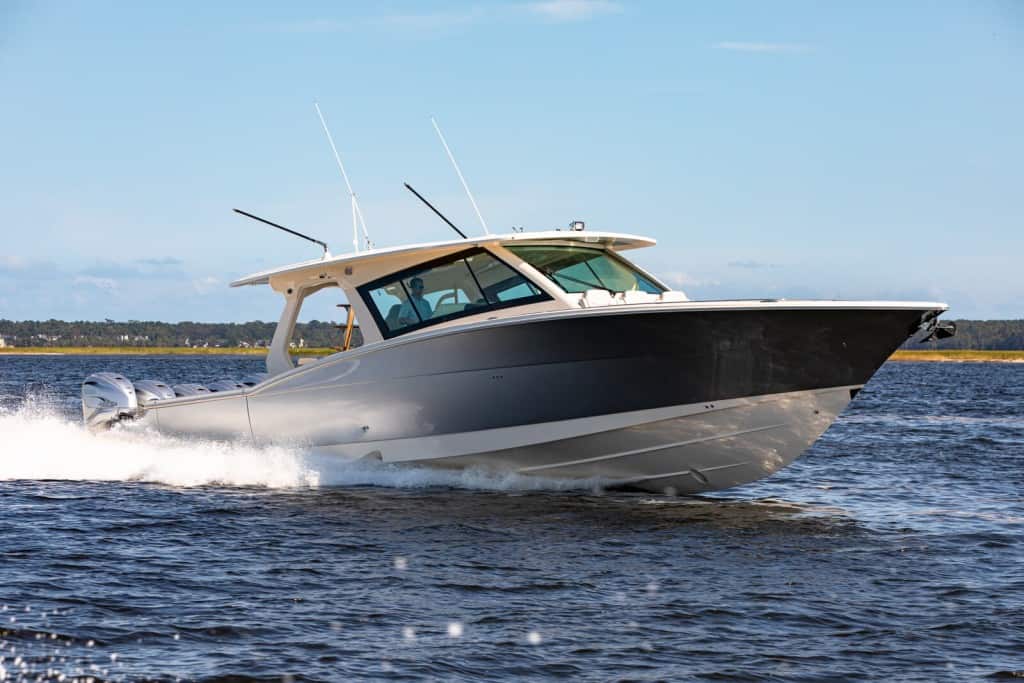
Customize a craft to fit your exact needs with our Build Your Scout tool. You can add features for fishing, boating, sporting, entertainment, and more to best enjoy your time on the water!

Wear a Life Jacket

You might think that because you can swim, you don’t need to wear a life jacket. But if you want to maintain complete safety on your boat, you should always wear your life jacket. This is especially important if you are fishing near the edge of the boat, or if the water is particularly choppy. Of course, never ski or go tubing without wearing a life jacket.


Minimize Alcohol Consumption

Boating is a fun activity that’s usually best on a hot, sunny day. We’d be naive if we thought alcohol was not consumed on boats during gorgeous afternoons like these! However, you should emphasize to your passengers that this is a boating trip, not a drinking cruise, and you expect them to keep consumption to a responsible level. As the “captain” of your boat, you should avoid alcohol so you can maintain control from start to finish.


Take a Boating Safety Course

If you want to be the best boater possible, a safety course is crucial. At a safety course—especially one approved or administered by the U.S. Coast Guard—you’ll get a reliable education on how to properly maneuver and steer your boat in a variety of conditions. You’ll also learn how to keep your passengers safe and how to properly dock. Even if you are an experienced boater, these classes can be crucial for long-term safety.


Check the Weather Before Leaving

More than any other hobby, boating depends on clear, calm weather and ideal conditions. Always check the local forecast before you leave on a boating trip. If there is any chance of stormy conditions, it may be best to wait. After all, your passengers will probably have more fun on a nicer day.


When in Doubt, Go Slow

It’s one of those obvious statements that all too many boaters forget—slow is best for boating. In open, unobstructed water, feel free to drop the throttle. Near other boats, around docks, and in shallow water, take it slow to keep your boat free from damage and your guests free from harm.


Be in Charge of Your Boat the Entire Time

Above all, it’s up to you to be in charge of the boat the entire time. It’s your craft, your property, and your responsibility. So, even if you’re not naturally a take-charge person, make sure your passengers understand that you will be calling the shots. You don’t need to be a task-mastering dictator, but someone needs to decide whether certain behavior is acceptable—be that person!


Purchase A Comfortable Craft for Safe Boating

With these essential boating safety tips, you’ll enjoy safe boating all year long. If you’d like to purchase a new craft, browse our selection of world-class vessels from Scout! We have everything from large offshore boats to small, shallow-water fishing crafts. Plus, you can customize your selection with custom features using our Build Your Scout tool! Try it today to design your ideal vessel.

Scout Boats

How to Get Your Boat Ready for Summer

With the boating season already upon us, it’s important to know how to get your boat ready for summer. Whether your boat is still waiting in winter storage or you’ve been out a dozen times already, use these simple tips to keep your boat in top condition during this warm and exciting season.

Clean the Hull

This is something you should do before your first summer boating adventure, but it’s also a task that should be done throughout the season. Thoroughly clean and wipe the hull using a mild detergent solution or a marine-specific cleaner. Once complete, use a quality paste wax and a buffer to remove swirl marks. Waxing probably only needs to be done about once a season, but routinely pulling the boat from the water to wash and rinse is always wise.

Wipe Down the Interior

Even if the boat was covered, you should wipe it down to remove any dust or debris that may have accumulated over the winter and spring. Vacuum the interior to give the boat a clean, tidy deck.

Rinse the Wells

Even if you cleaned the wells before winter storage, it never hurts to give them a thorough rinsing before you go fishing. Rinsing the live wells will help protect pumps, plugs, and other features from damage, and will keep the wells from getting a “fishy” smell.

Inspect and Service the Mechanics

The main parts of your boat that you should inspect are the battery, fuel lines, drive belts, spark plugs, and pumps. These are the primary features that are essential to the overall performance of your boat. In addition, check all fluid levels, such as coolant, lower unit, transmission, and oil. Replace any fluids if necessary.

Check and Restock Your Safety Equipment

Safety is the most important part of boating, and there is specific boating safety equipment that is required by law to be on board every boat. Some required items include life jackets, a first-aid kit, throwable flotation devices, a fire extinguisher, flares, and signaling devices.

Stock Up on Summer-Boating Essentials

Take the time to stock up on summer-specific materials that will provide the comfort your group deserves. This should include, but is certainly not limited to, sunblock, bug repellant, and towels. You may want to store extra hats for sun protection, and stashing a few water bottles in one of the storage areas is always wise.

Purchase a Luxury Boat from Scout

We hope you better know how to get your boat ready for summer! If you want a new boat for the season, Scout Boats has a fine selection of luxury crafts. From large off-shore vessels to small boats for fishing the shallows, you’re sure to find the craft that fits your needs. Plus, you can customize the boat of your choice exactly to your liking with our Build Your Scout tool. Try it today to create a craft with amazing luxury features.

Build Your Scout

Scout Boats

7 Shallow Water Boating Tips

Fishing in shallow water is one of the most enjoyable ways to catch numerous fish. But you have to be careful, as you can become stuck in shallow sand or mud. Plus, rocks, logs, or reefs can damage your boat. View these seven shallow water boating tips to navigate safely!

Go Slow

Whenever you’re boating through unfamiliar shallow water, you need to take it slow. Speeding through shallow water—even shallow water that you are familiar with—is a quick way to ruin your propellor, lower unit, and hull. Take it slow and you won’t have to worry about causing damage to your craft.

Check the Depth Finder Constantly

Depth finders aren’t just for fishing. They are also important for maintaining safety while boating over shallow water. As you slowly cruise along, keep an eye on the depth finder. If your technology allows, mark obstacles and save depth information for later use.

Use a Spotter

It can be hard to spot shallow-water obstacles from the driver’s seat of a boat. Whenever possible, use a spotter at the front to make sure you are not heading for sunken logs, rocks, weeds, reefs, wrecks, and other debris that could damage your craft.

Don’t Fully Lift the Outboard

This may seem counterintuitive, but one of the best strategies for boating in unfamiliar shallow water is to keep the motor down a few inches below the bottom of the hull. If you get hung up on the motor, you can lift it and release yourself. If you run aground on the hull, it’s a lot harder to get loose.

Color Changes Indicate Depth Changes

Generally speaking, deep blue and dark-colored water is an indication of depth, while lighter colors indicate shallow water. However, color changes can indicate seaweed beds and other structures that can catch your motor. Basically, stick to consistent colors in the water and avoid drastic changes to keep boating along comfortably.

Use a Pole and Poling Deck

Fishing in shallow water often requires the stealth and accuracy of “poling.” This is a technique where one person sits on a lifted platform towards the rear and pushes the boat through shallow water using a long pole. An angler at the front then does the fishing. This is a primitive but highly effective practice for shallow water boating, and having a pole in the boat can also help if you become stuck in shallow sands.

Small Boats are Easily Effected Heavy Loads

A large boat may only have minimal changes to the draft when loaded with people, gear, food, and everything else you need for a fishing trip. A smaller boat, however, is more susceptible to the weight. If you plan on boating over shallow water, be aware of how much equipment you are loading into the boat.

A Shallow Water Boat that Fits Your Needs

We hope you enjoyed these seven shallow water boating tips. If you’re looking for a boat that is perfect for shallow water, check out the full selection from Scout Boats. With many options for light, nimble crafts, we have the right options for your shallow-water boating needs. Plus, you can customize your craft with features that fit your exact needs with our Build Your Scout tool. Create your dream boat today!

Scout Boats

Should You Rent or Buy a Boat?

Boats are a great way to spend time with friends and family. Buying a boat is wonderful, but renting has also become a popular option for many people. So, how can you decide if you should rent or buy a boat? Consider the pros and cons of each choice below.

The Case for Renting a Boat

Most people who love boating, fishing, and being on the water will buy their vessel. But there are strong arguments for renting. When you rent, you don’t commit to the financial burdens of boat ownership. Maintenance, boat payments, and repairs add up fast, so renting can be more affordable for many boaters.

Renting can also make accessing the boat easier. Instead of hauling a boat six hours for your family vacation, you simply drive to your destination, pick up the boat, and enjoy. Plus, you don’t have to worry about storage, which is yet another expensive.

Renting a boat, quite frankly, is just a more convenient option, and if you are only using a boat a few times a year, it’s also far more affordable. Purchasing a boat, especially a new boat, also means consuming the depreciation, which is not a problem for renters. When you rent, you can also try many kinds of boats, which is great if you are just learning about boating.

The Case for Buying a Boat

When you buy, the boat is yours, which has obvious benefits. Most importantly, the boat is available whenever you need it—you don’t have to call ahead and reserve the craft, and you don’t have to hope the boat is available for your one weekend at the lake. It’s yours to use as you please. Being able to use your boat spontaneously is rarely a luxury for renting.

In the long run, buying can also be more affordable, especially if you use a boat many times over the course of a year. Renting will cost hundreds or even thousands of dollars every time, depending on the type of boat you rent—for people who rent frequently, this can quickly pass the costs of buying.

Rent or Buy? How to Make the Final Choice

Making the final choice whether you should rent or buy a boat can be tough, but you can decide based on one question: how much will you use a boat per year? There is no official rule, but generally, if you are using a boat once a year, renting will certainly keep you happy. If you plan to go boating once a month or more, then perhaps you’d like to buy. You should also consider your comfort level with storage, maintenance, gas, and trailering to help guide your decision.

Purchase a High-Quality Boat from Scout

If you want to buy one of the finest boats on the water, you need a Scout! Visit our site and use our Build Your Scout feature to create a world-class boat that will keep you and your family happy for years. Part of successfully owning a boat is choosing the right vessel for your needs. With this tool, you’ll have no problem making the perfect choice!

Scout Boats

Bay Boats vs Offshore Boats: What’s the Difference?

Should you purchase a bay boat or an offshore boat? And what exactly is the difference between the two? It might seem like a tough decision, but if you learn about the design and purpose of each type, you will be able to choose the boat that is right for you.

Build Your Scout

What is an Offshore Boat?

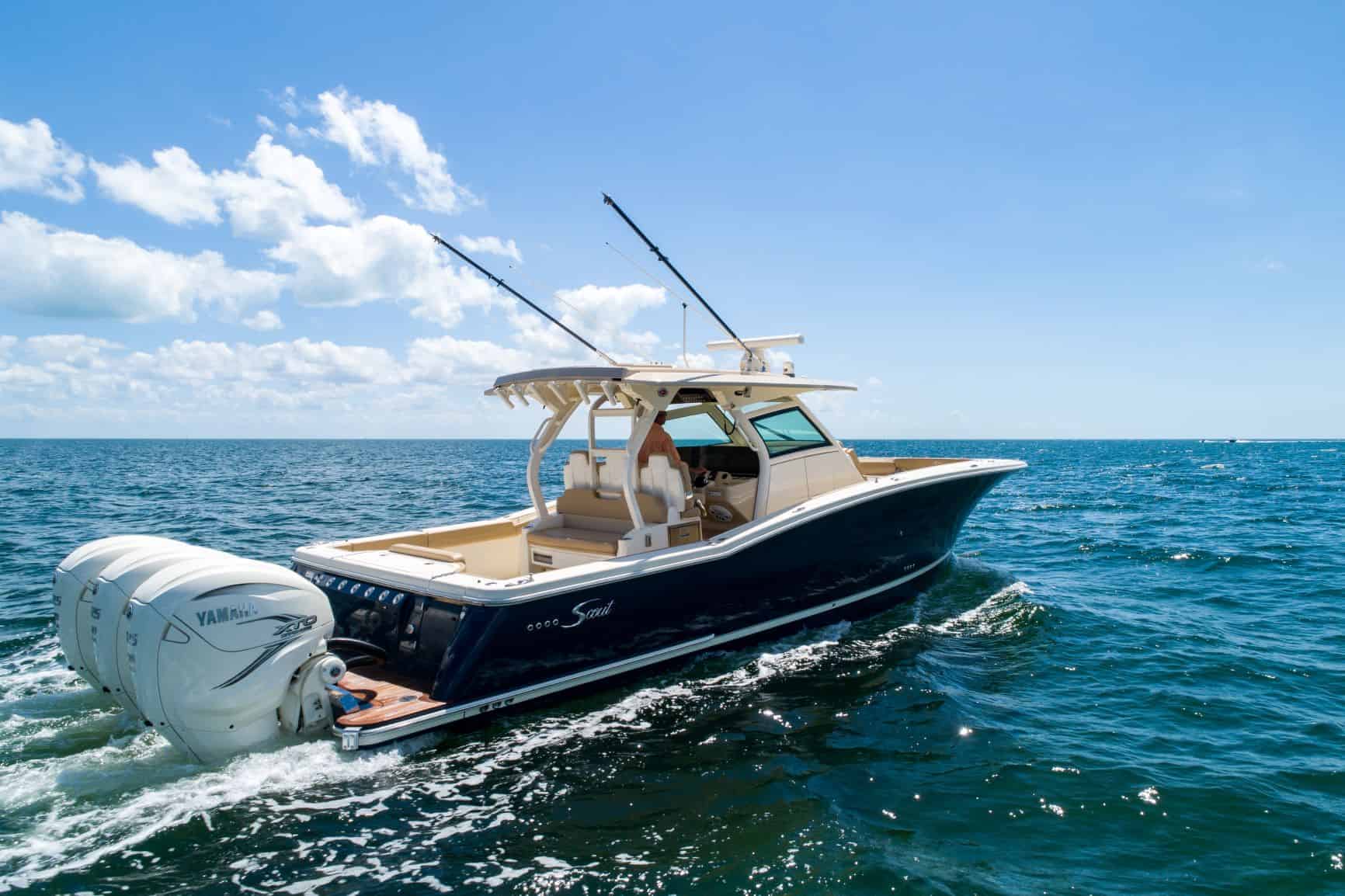
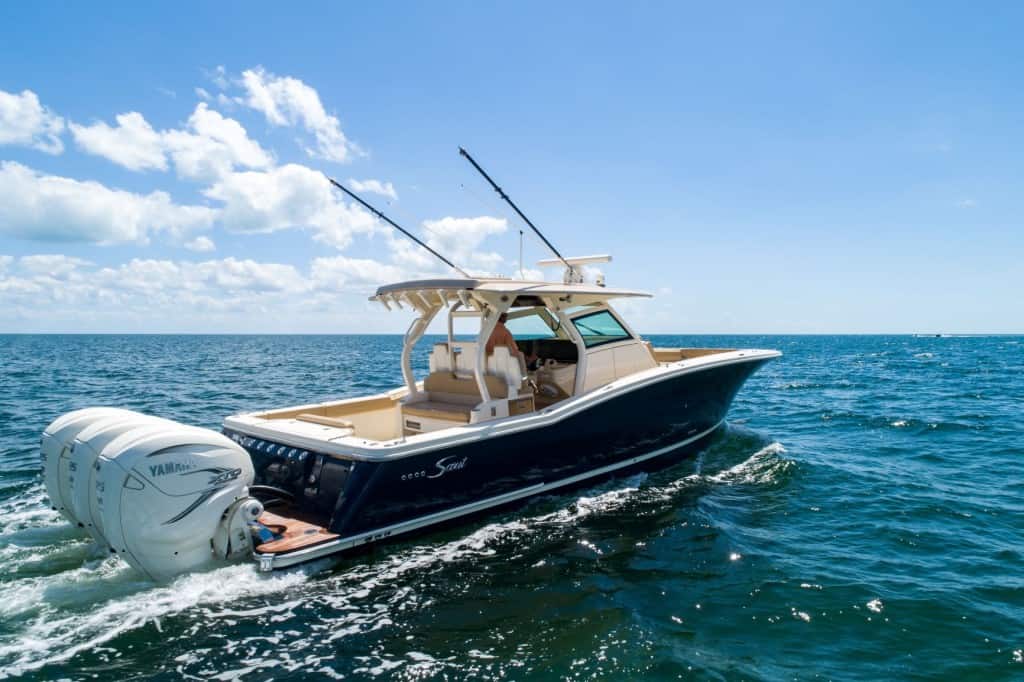
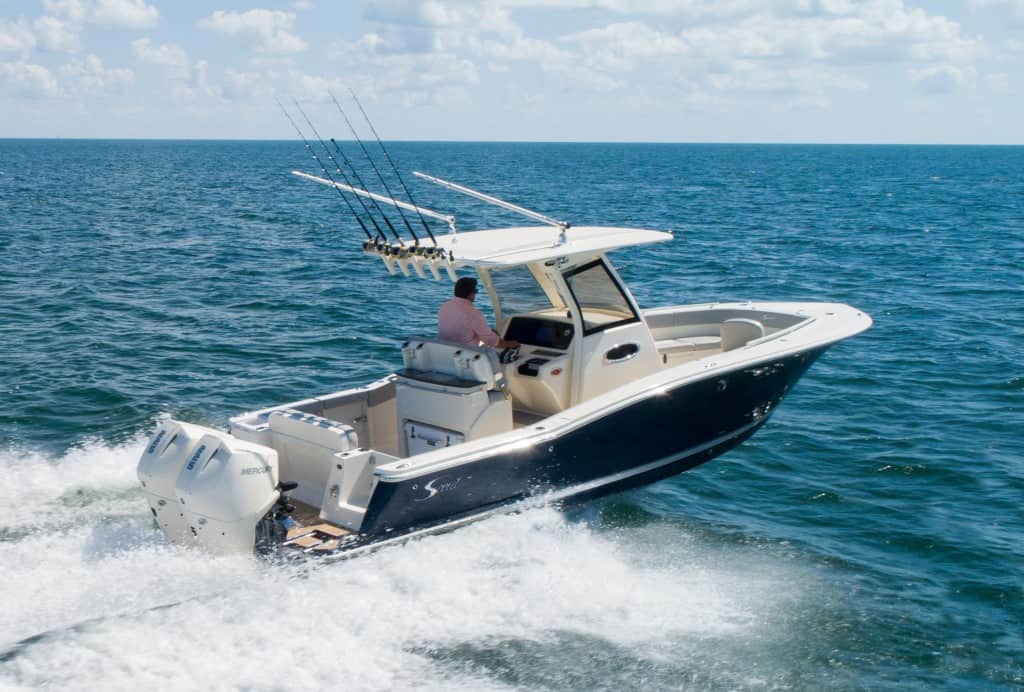
Generally speaking, an offshore boat will be the larger of the two. They will have more length from bow to aft, more square-footage on the deck, and more room for storage and convenience features. They are also more likely to have a cabin. In addition, more boat space also allows for more passengers, and it means better protection from larger waves that are found in the open ocean—waves that might create trouble for other crafts.

As the name suggests, these boats are capable of safely traveling “offshore.” They can head out into the sea for miles and maintain safety and comfort. Because they are meant for long excursions, they often come equipped with luxury and comfort features, such as a cabin with sleeping quarters, a dining table, a head, and entertainment features. They also usually have equipment designed for catching large fish, such as outriggers, bait stations, and large live wells.

What is a Bay Boat?

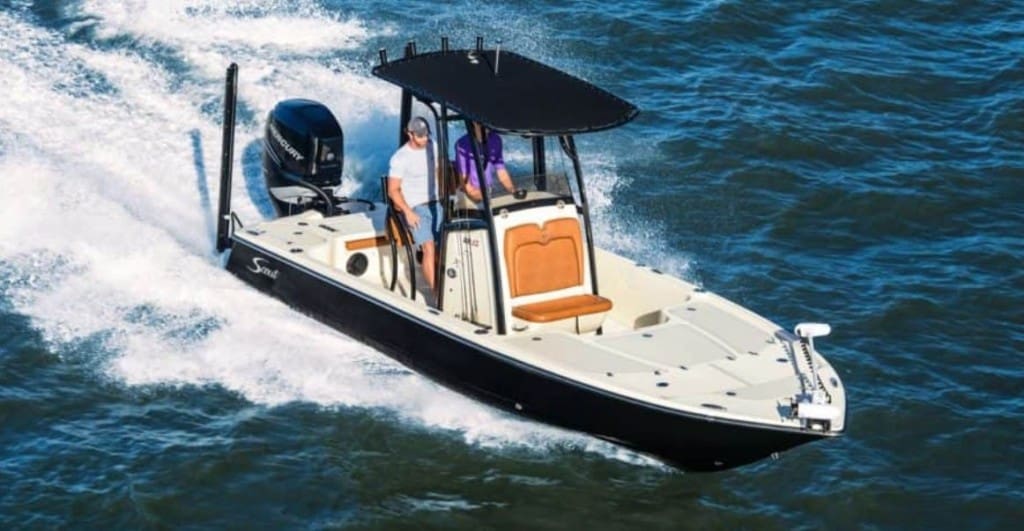
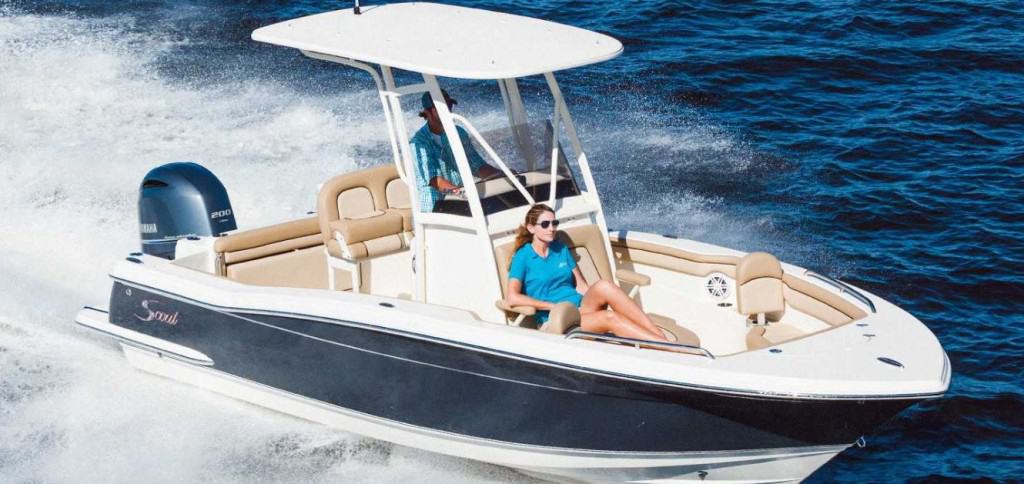
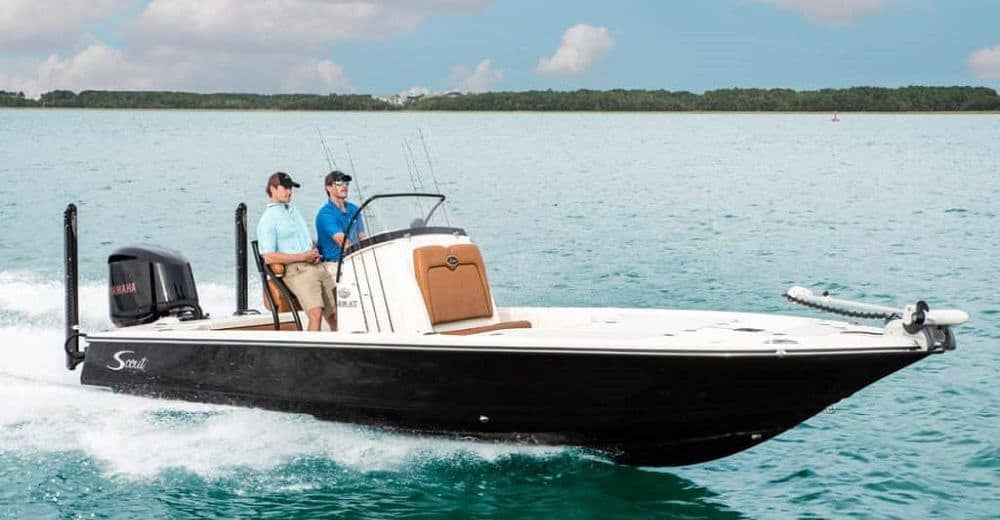
Before bay boats were invented, boaters essentially had a choice between large offshore boats and small flats boats. Bay boats provide a nice middle ground. They are large enough that they can travel in bays and can go offshore in ideal conditions. Their manageable size makes them ideal for novice boaters in coastal areas. In addition, they have a shallow draft, meaning they can even travel over shallower waters without touching the bottom. This gives boaters access to fishing waters that larger boats can’t reach.

There is no specific rule to the size of bay boats, but they are often between 20 to 25 feet long. They come with many luxury features, although certainly less than a large offshore boat. Most importantly, they have a hull specifically designed to provide both a smooth ride across choppy waters and access to shallow-water fishing.

What are the Main Differences?

The main difference is size. Simply put, an offshore boat is larger, which has advantages and disadvantages. Compared to bay boats, offshore boats provide more safety and a stable ride in offshore conditions, while also delivering the potential for more luxury, convenience, and seating space.

However, bay boats are easier to manage, can be trailered with less effort, and can access fishing areas that would strand offshore boats.

Purchase a New Craft from Scout!

We hope you better understand the difference between bay boats and offshore boats. If you are looking for a world-class vessel that can help you enjoy fishing in bays, open water, or even intertidal flats, you need a Scout! We create luxury fishing boats in a wide variety of models and sizes, and you can even customize your favorite option with the features that meet your needs. Try our Build Your Scout tool today!

Build Your Scout

Bay Boats vs Flats Boats: What’s the Difference

There are a lot of different terms that are thrown around in the marine and boating industry. Many of these terms are used to describe products that have subtle differences, yet can be very similar. Take, for instance, the terms “bay boat” and “flats boat.” These two types of crafts are easily confused, but have unique features and purposes. Here, we’ll help you determine the exact difference between the two.

To customize your craft to fit your exact needs, use our Build Your Scout tool. You can add features for fishing, boating, sporting, entertainment, and more to best enjoy your time on the water.
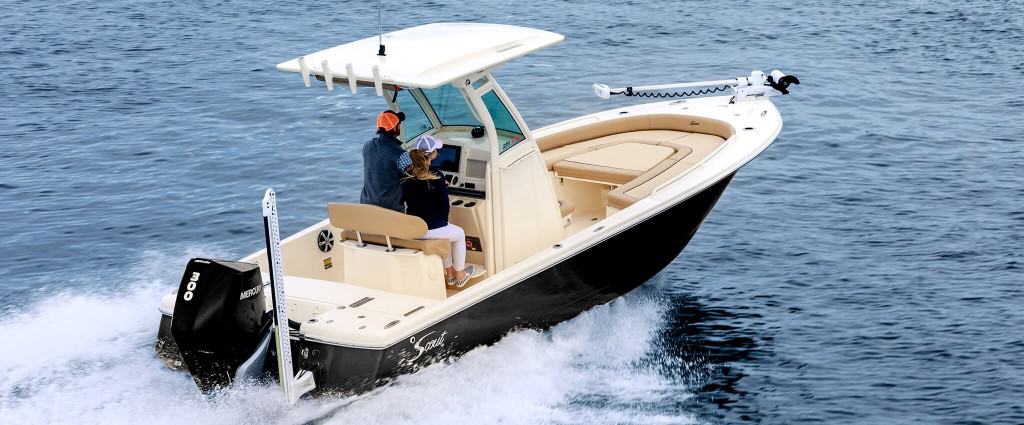
What is a Flats Boat?

The term “flats boat” derives from the fact that these boats are used for fishing in shallow water flats, not because they are flat in shape.

Also known as “skiffs,” these boats have a shallow draft (how deep the boat goes into the water) that allows them to cruise over waters sometimes as shallow as 12 inches, providing access to locations other boats can’t reach.

Flats boats don’t have an official size, but they are usually about 15 to 25 feet in length and have an outboard motor. They are light enough to be pushed forward easily with a pole, and generally sit two to three people. They are designed for fishing, so there is often a casting deck at the front and a poling deck towards the rear, with the idea being that one person pushes the boat forward while the other casts a line.

What is a Bay Boat?

Before bay boats came along, there were basically only flats boats and offshore fishing vessels. Filling the gap between small and large boats, bay boats became popular as a hybrid option. They can travel in relatively shallow water, yet still deliver smooth performance in bays, large lakes, and offshore areas.

Bay boats generally have the same length as flats boats, but they are heavier and have deeper drafts. The hulls tend to use features and characteristics from both larger and smaller boats to achieve a balance of performance, ride quality, and mid-level drafts. They also often have a deeper “V” shape to the hulls, allowing them to smoothly cut through water.
The Main Differences

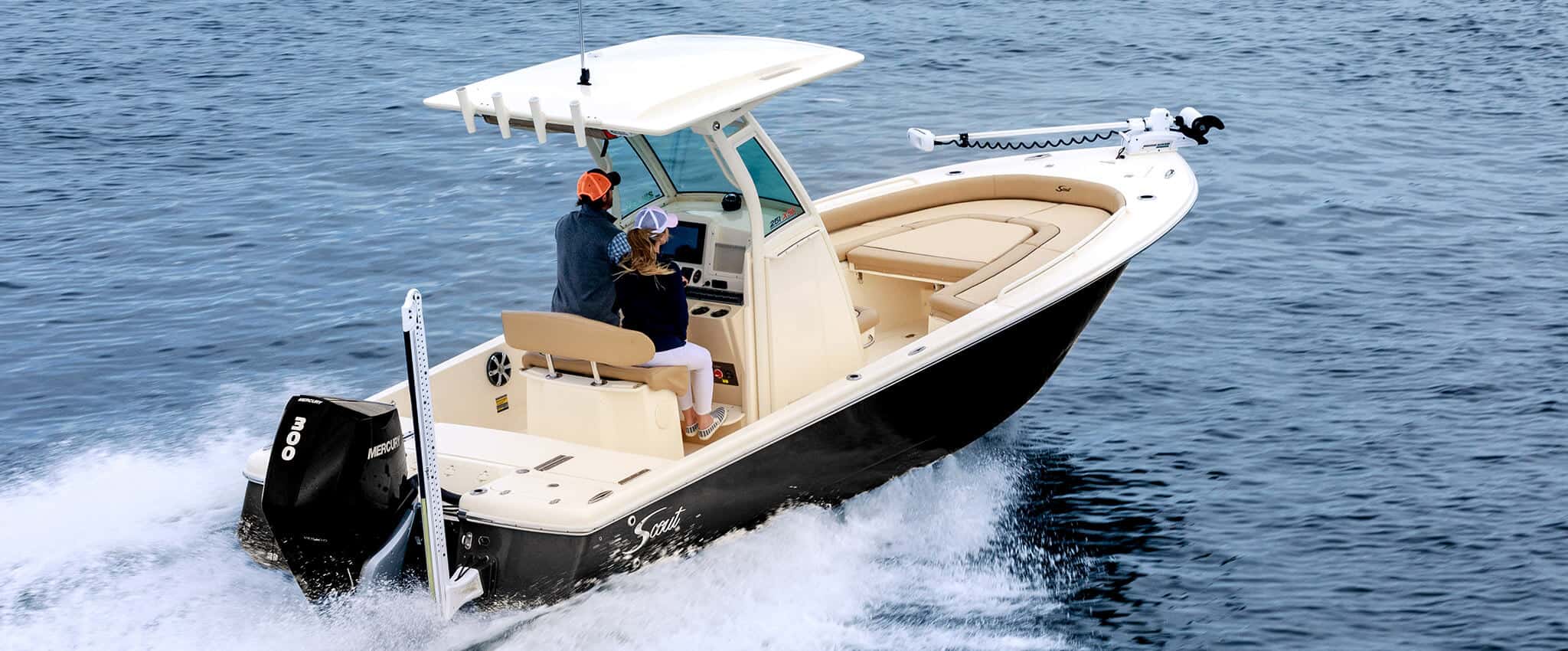
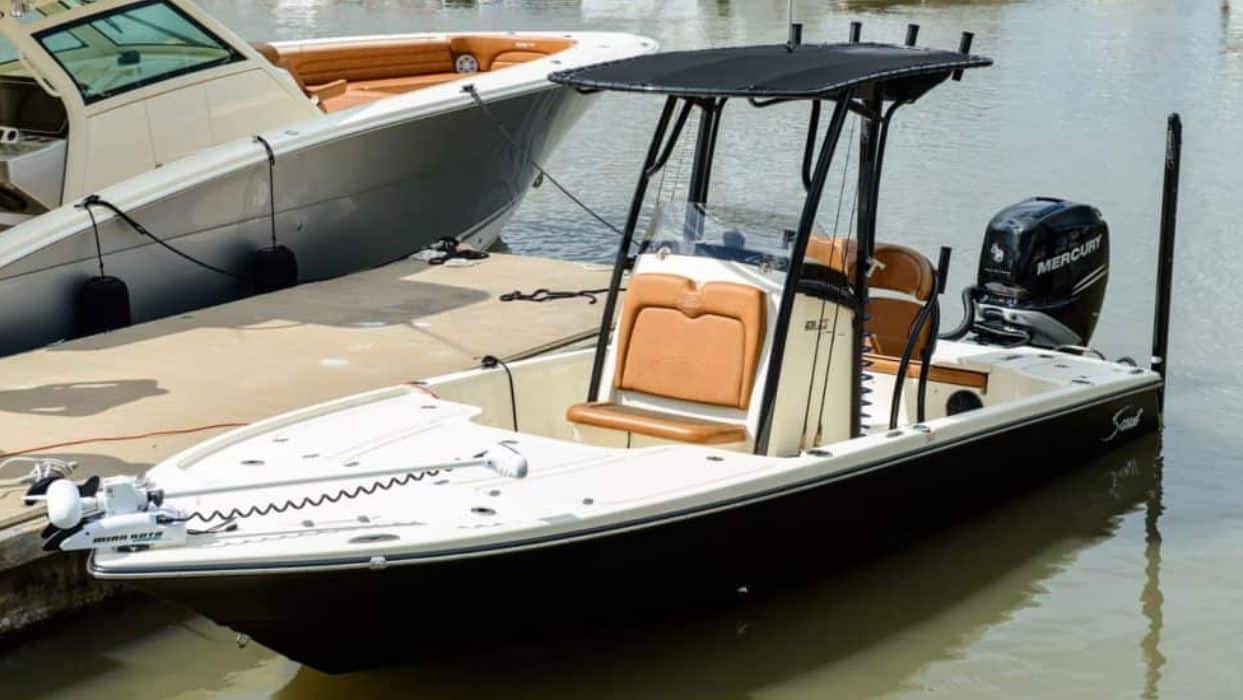
Scout 251 XSS Model

The main difference between bay boats and flats boats is where they can travel. A flats boat can reach extremely shallow locations, giving you access to untouched waters where many trophy fish are hiding. Bonefish, for example, is a popular sportfish that’s often pursued from a flats boat.

Bay boats, however, give a balance between shallow-water potential and offshore access. They often have a shallow draft, giving far more access to shallow water than offshore boats, but they also have the ability to cruise across open water with greater comfort and a smoother ride compared to flats boat.

Find Your Ideal Craft

Whether you want a flats boat or a bay boat, you’ll find the perfect craft from Scout Boats. Plus, you can customize your craft exactly to your liking with our Build Your Scout tool. Try it out today!

Scout Boats

Should You Buy A Boat? Things to Consider Before Buying

Owning a boat is one of life’s many pleasures—but the decision to buy a boat should not be taken lightly. Many owners have rushed into a purchase and were unprepared for all the details of ownership. Fortunately, you can make the right choice by reviewing these things to consider before buying a craft.

If you feel confident in your decision to purchase a boat, design the craft of your dreams with our Build Your Scout tool! It allows you to customize every feature to your exact needs.

Do You Have Time to go Boating?

There are a lot of details that go into owning a boat, but the most important is also the simplest—do you have time? If you are a busy professional with an active family and numerous responsibilities, it can be hard to find time for boating. Consider some of the hobbies you’ve had in the past. Were they neglected because you couldn’t find the time? If that’s the case, it may be hard to find time for boating, hence such a large purchase may not be worth it.

Does Your Family Enjoy Boating?

If you have a family, what are their hobbies and activities? The last time your family went on a boat, did they enjoy it? Did your spouse, partner, or children seem interested in buying a boat for the family? If there was lots of excitement for boating, then you will be more likely to enjoy owning your own craft. Boating is a great family activity, and it can bring everyone together for a full day of fishing, skiing, and cruising the waters.

Is the Water Near Your Home?

If you have to drive two hours to reach a good body of water, there is a strong chance that you will not go boating nearly as often as you prefer. However, if you can keep the boat at a marina that is only ten minutes from your house, you could go out on a weekday afternoon. The closer you can be, the more use and enjoyment you will get from your boat. 

How Much Boating Experience Do You Have?

You don’t have to be an experienced sailor to own a boat. However, the more experience you have with boating, the better. If you only rented a boat on your last vacation, but have no other experience, perhaps it would be best to continue renting for a while. As you gain experience, you can build confidence and eventually purchase the right vessel for your needs.
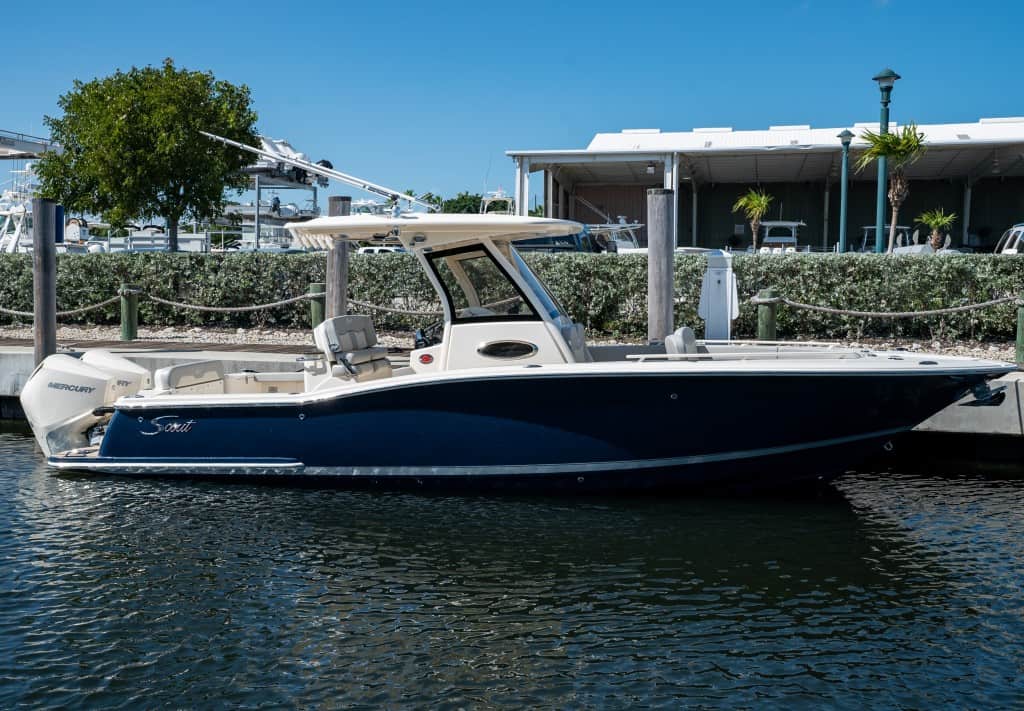
Will the Added Costs Hurt My Finances?

There are lots of additional expenses associated with owning a boat. There will be maintenance and repairs, fuel and oil, lifejackets and throwables, rods and reels, and much more. In additions to the cost of the boat itself, these expenses can easily go into the tens of thousands of dollars every year. Make sure you are prepared for these expenses before buying.
Can You Store the Boat Nearby?

This aspect of boat ownership is all too often neglected. Where will the boat be stored? At a marina? In your garage? In a storage facility? Decide on storage and research prices before you purchase a boat.

Purchase the Perfect Vessel

If you’re ready to purchase a top-quality boat, use our Build Your Scout tool to create the perfect vessel for you and your family.

Scout Boats

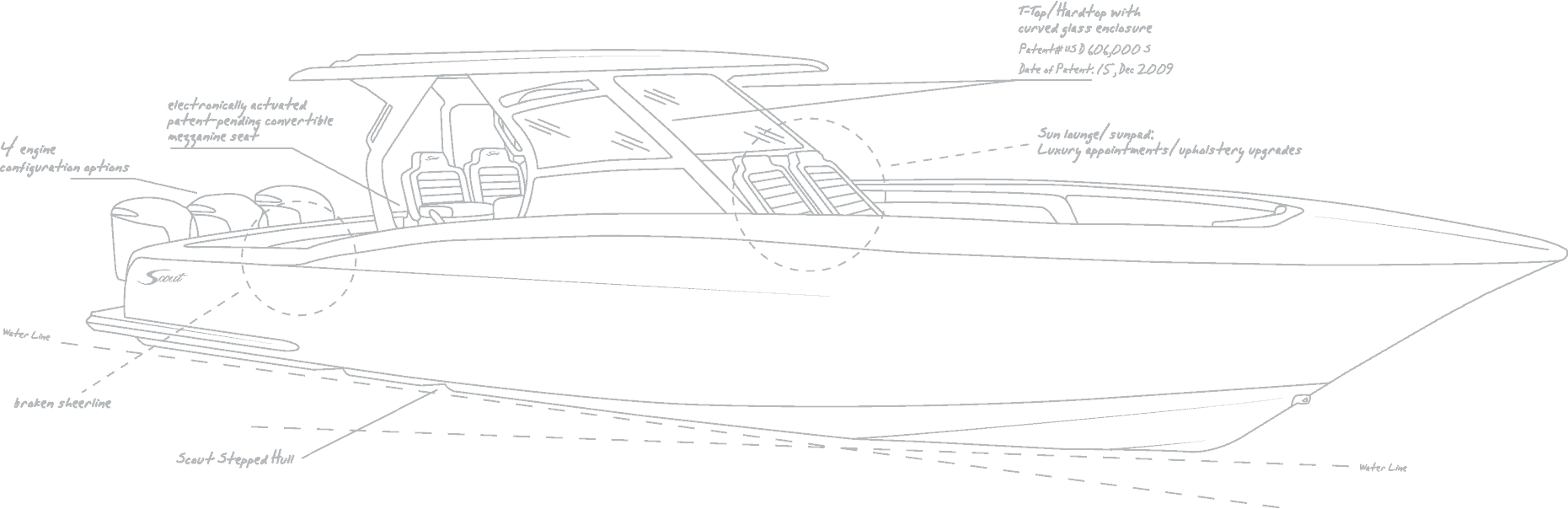
530 LXF Scout Line Drawing

Build Your Scout

Click below to build your dream Scout model.